
Getting Started: Equipment Guide
Adobe Stock Image
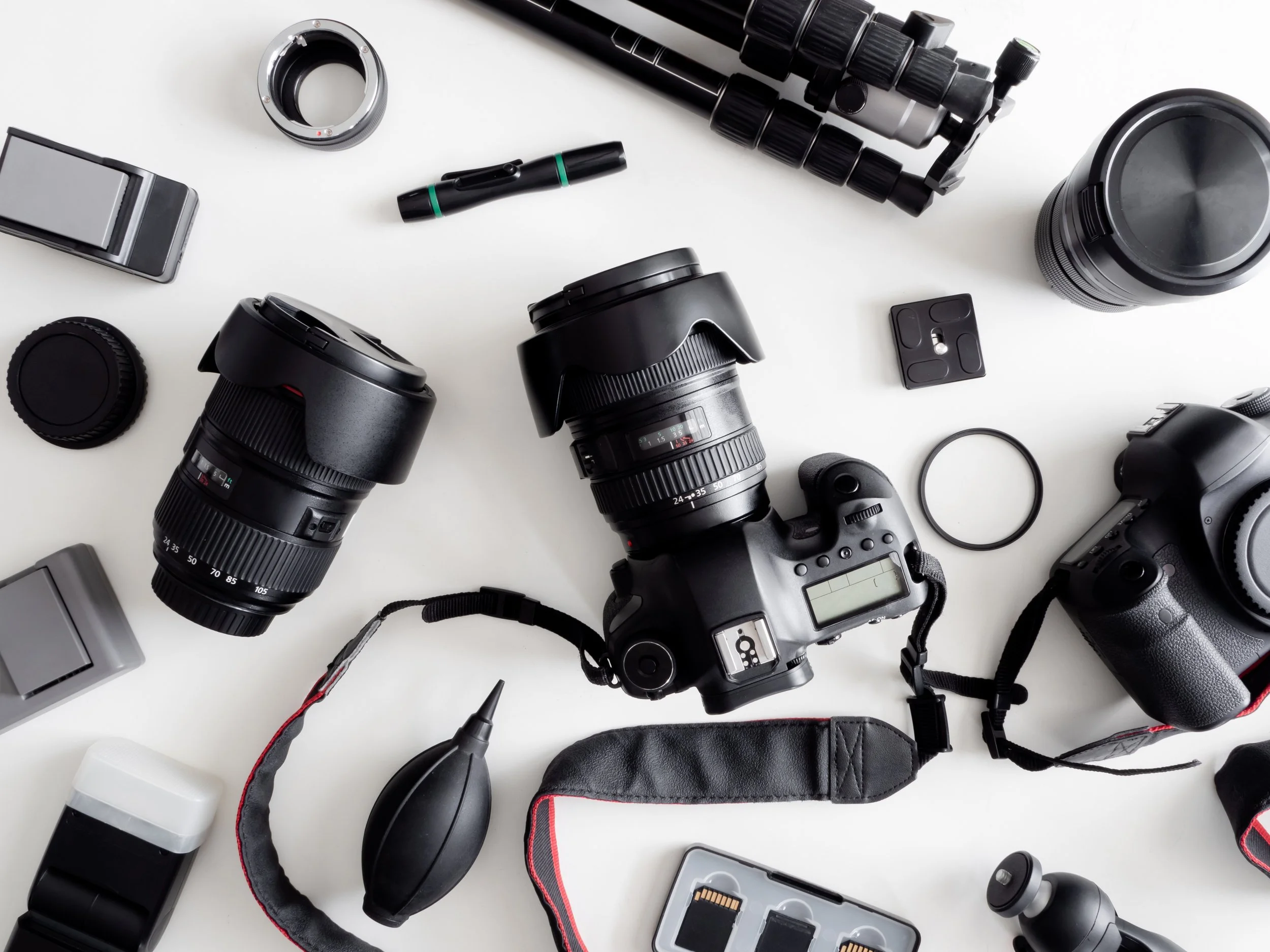
When it comes to getting started in photography it can be easy to get overwhelmed with all the equipment options. And once you start looking online you’ll quickly realize that photographers are very passionate about their gear. The Nikon vs. Canon debate is alive and well and rivals the Mac vs. PC debate in intensity (a debate which is also largely driven by photographers). This is more of a general buying guide, if you want help designing a specific kit use the contact form to reach out to me. My goal is to cut through all the noise, tell you were you can save (and where you really do need to splurge). I don’t recommend a specific camera because as soon as I do this post will be out of date, but I tell you what you need to be paying attention to so you can get started. This post is for the beginner, all of the people who come up to me and say, I (or my teen) want to get started with photography and we don’t know where to begin. This is how to build a kit designed for learning photography,. not a kit designed for a specific type of photography.
Camera: When it comes to starting out in photography the best camera is the one you can afford that still leaves you money for good glass (lenses). But practically speaking there are a few things you can keep in mind when making that first camera purchase
Brand doesn't matter (much). Canon, Nikon, Fuji, Sony the debate as to which is "best" has been raging among photographers for decades. In the end though they all make perfectly good cameras. If you are fortunate enough to live near a camera store, stop in and try some out and see what feels best in your hands. Otherwise pick whatever you like, whatever you get the best deal on, whatever your friend tells you is their favorite, just don't get bogged down even worrying about it.
Your biggest choice is going to be Dslr or Mirrorless. And the decision between the two is likely going to come down to price. Mirrorless is the newer technology and it does have some major advantages when starting out. most notably What You See is What You Get meaning you will be able to see the effects of changes to your exposure settings in real time. A mirrorless camera kit is going to get you back about $1k (you might get just under that if you shop used, but even so).
DSLR is the slightly older digital technology and its fine! For the last 20 years this is what digital cameras were (and film cameras before that just minus the Digital). The biggest advantage to Dslrs is that with mirrorless replacing them the cameras and lenses are much more widely available on the used market place.
Don't be afraid to shop used, just shop reliable used stores (I like Mpb.com and keh.com) and pay attention to condition scores (it is usually not that much more to go from good to excellent and it likely means the camera or lens was better cared for/not as heavily used).
Lenses: Most people starting out spend a lot more time worrying about the camera than the lenses and most people have it backwards. Any mirrorless or dslr camera made in the last 10 years is going to be perfectly fine starting out. The biggest difference is going to come from the glass you put in front of it.
Worry less about the zoom range. Don't be so quick to grab cheap zoom lenses just because they cover a larger range. Those lenses come with trade offs, most notably high f/numbers which make shooting indoors almost impossible and learning aperture tricky. We can move (aka zoom with our feet) more often than we give ourselves credit for, but making up for those slow apertures is much more difficult.
Almost every camera manufacturer sells an inexpensive 50mm 1.8 lens (often referred to as the "Nifty Fifty") or an inexpensive 35mm 1.8. These are prime lenses, they don't zoom but they're great for learning on (my own kids learned on 35mm prime lenses before I let them have zooms). Even good (read expensive) zoom lenses almost always have apertures slower than f/1.8 so that small, relatively inexpensive 35 or 50mm will continue to have its place in your camera kit for years to come.
If you get a good deal on a kit that comes with lenses, go for it, just keep them for photographing outdoors.
Your lens choice is going to be very dependent on what you like to photograph. Start minimal to learn and then add lenses based on what you feel like you are missing.
Most camera manufactures make an f/4 version of their more expensive f/2.8 zoom lenses. They are still going to be a little bit pricy but they will be much better quality than a kit lens and you can often find them used since people sell them off when they sell them to upgrade.
SSD Drives/Memory/Card Readers: Once you start taking pictures you're going to need a plan for what to do with all of those photographs and it's helpful to plan ahead.
SSD cards are relatively inexpensive, so buy plenty and buy good ones. Camera manufacturers often recommend particular brands that work especially well with their cameras. If you can't find recommended brands or card types go for fast, name brand cards (I like Lexar and Sandisk). Memory card performance will affect the camera performance not to mention, poorly made cards are at risk failing and costing you your photos.
A portable SSD drive is a good to have for backing up your photos. You need somewhere to put all of those photos you are taking, and a portable SSD drive is usually a good starting point. Copying to your computers hard drive can work in a pinch but you will eventually fill it up. A small hard drive works too, but ssd is generally faster and more reliable (Samsung T5/T7 drives are my personal preference).
Hard drives and SSD drives do fail (I've had multiple failures over the years and I'm really careful with my drives). You always want your photos in more than one place, at a minimum you need a cloud backup in addition to local storage.
The easiest way to get pictures from the camera to the computer/storage drive is with a memory card reader. You can use a usb to connect the camera to the computer but a card reader is less than $20 and I find it easier. I know a lot of people prefer to use a card reader just so they don’t risk knocking their camera off their crowded desk every time they transfer images.
When you are ready to learn post-processing an Adobe lightroom subscription is a great place to start. I'm not going to go into post processing here because that's another topic, but I just wanted to mention that the Adobe Lightroom subscription is a great place to get started and runs about $12 a month. If you really get into processing you can upgrade to Lightroom + Photoshop for $20 a month.
Accessories: Really the camera and lens and memory cards are all you need to get started but there are a few accessories that can make life a little bit more pleasant.
A good camera strap can make a long day of photographing much more comfortable. If you buy your camera new it likely came with one, but you still might find that adding your own is worth the relatively small cost in comfort and adjustability. I like the Peak Design Straps (slide lite on my lighter weight cameras, slide for the heavier ones), but Think Tank makes a nice one for less, and if you want to splurge the Ona leather straps are amazing.
There is a joke that most photographers own more camera bags than shoes (ok, actually that is true in my case). Camera bags are personal and situation specific, but as a good all purpose recommendation to get you started I really like the Think Tank Turnstyle Sling bag. I find sling bags to be a good all-purpose choice. The gear is easier to access than it is in a backpack, but it's still comfortable for everyday use, and in a crowd it's easy to wear on the front to protect your gear from pickpockets.
This might be a bit of a hot take, but I feel strongly that you don't need to buy a tripod until you need a tripod and when you need one you need to spend the money to buy a good one. Whether you need one is going to be largely dependent on what and how you photograph and when you need one you will know you need it so don't buy it until you do. But if or when you do need one, go to a camera store to get one not a big box store. A decent tripod is going to cost you at least $100-$200, and there can be good reason to spend quite a bit more. I don't tell anyone to spend money they don't need to spend, but if you're spending less than that it won't actually do what you need it to.
One last raging debate in the camera world is whether you should be putting UV filters over your camera lenses. A UV filter is basically just a clear piece of glass that you can screw onto the front of your camera lens. While they are no longer necessary to block UV rays (that's left over from the film days) a lot of people use them to protect their camera lens. While they do protect the delicate glass elements on the front of your camera lens from bumps and scratches, adding an extra layer of glass in front of the camera can reduce image quality, especially when shooting into the sun/light source where they can cause some flare and softness. My own personal preference is to use the lens hood and call that good enough, but I do put them on my 9 year olds lenses, not so much because he's not careful but because I don't want him to have to be, I want him to just enjoy taking pictures. So if they give you that same peace of mind they're not a bad idea. Since it is going in front of the lens and can affect picture quality, buy a good quality filter if you're going to use one (I like B+W or Tiffen).
An extra camera battery or two is one of those annoying but probably necessary purchases. If you are using a Dslr you might get away with one battery for a while, but mirrorless cameras are notoriously power-hungry. The manufacturer will give you an estimate of how many images you'll get per battery but I find that estimate to be about as optimistic as a car manufacturer's gas mileage estimate. Also, batteries are stupidly expensive and there are often third-party options for less, but proceed with caution when it comes to going that route. I know plenty of photographers that swear by knock off batteries, my own track record is much more mixed, they often don't hold up as well and I've had some swell and come close to damaging the camera (which could have been expensive and not covered under warranty since the camera maker won't guarantee batteries that aren't their own).